Ferrari Amalfi: The New Grand Tourer Redefining Everyday Performance
Ferrari introduces the Amalfi, a grand tourer designed to combine everyday usability with the unmistakable performance and emotion of Maranello.
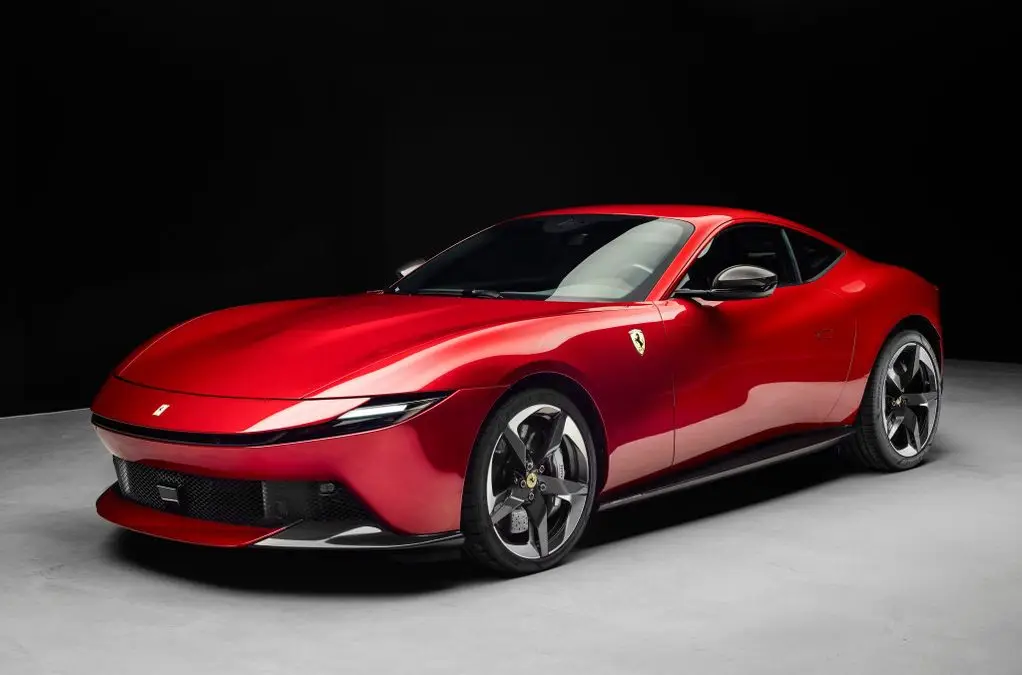
For decades, Ferrari has mastered the art of building cars that inspire desire long before they are driven. With the new Ferrari Amalfi, the Italian marque continues that tradition, presenting a grand tourer that balances breathtaking performance with the everyday refinement expected of a modern flagship from Maranello.
Named after one of Italy's most storied stretches of coastline, the Amalfi is unmistakably a car built for the journey. It is a Ferrari conceived not around the stopwatch, but around the road — the kind of road that unwinds through cypress-lined hills, tunnels carved into cliffs and villages waking up to the smell of espresso.
Positioned as the successor to the Roma, the Amalfi embraces a more sculpted design language while preserving the elegant proportions that made its predecessor one of Ferrari's most admired modern creations. Where the Roma leaned into softness, the Amalfi introduces tension: sharper shoulders, a more resolved front graphic and a rear treatment defined by a full-width light bar that reads almost architectural at night.
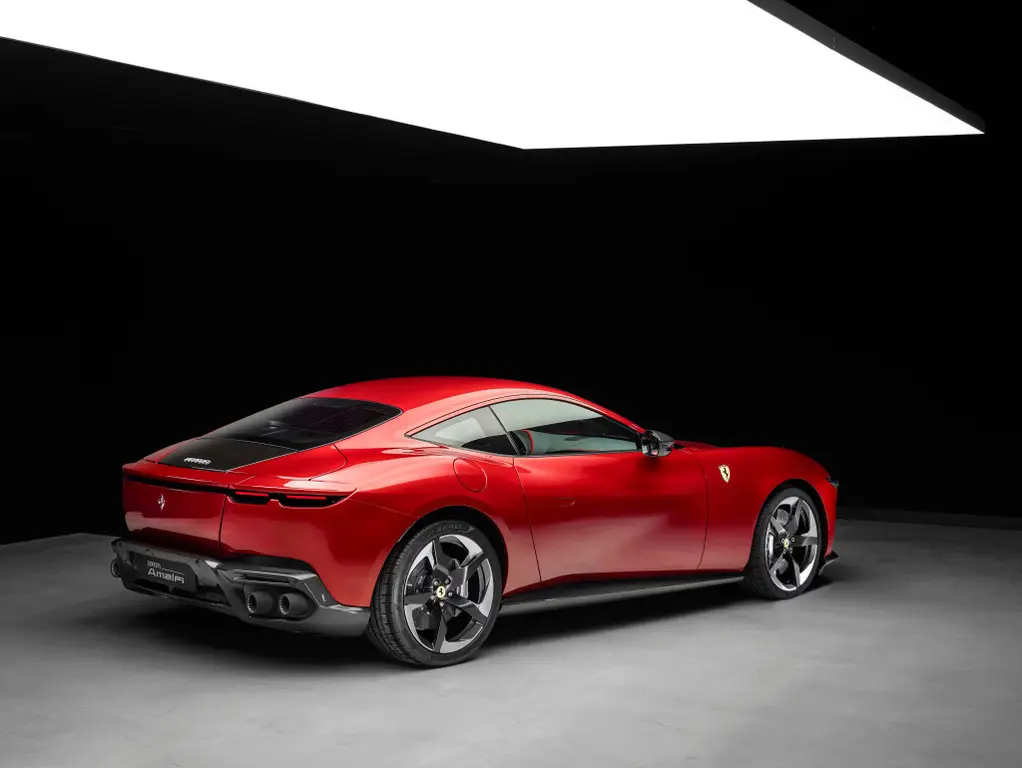
Rather than chasing aggressive styling, the Amalfi adopts a cleaner and more sophisticated approach. The bodywork flows with confidence, emphasising long lines, muscular rear haunches and a purposeful stance without unnecessary visual drama. It is a design that photographs beautifully at a standstill and looks even better in motion.
Inside, Ferrari has refined the cabin with improved ergonomics, updated technology and a stronger focus on driver engagement. A reworked dual-screen layout puts the essentials directly in front of the driver, while the passenger enjoys their own display — a small but meaningful gesture that turns the front seat into part of the experience rather than a spectator's chair.
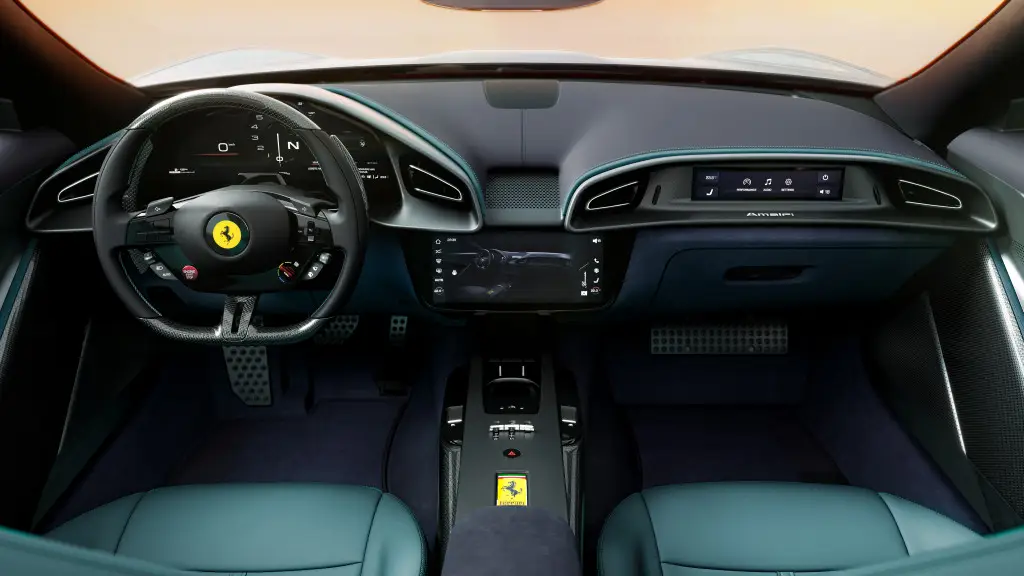
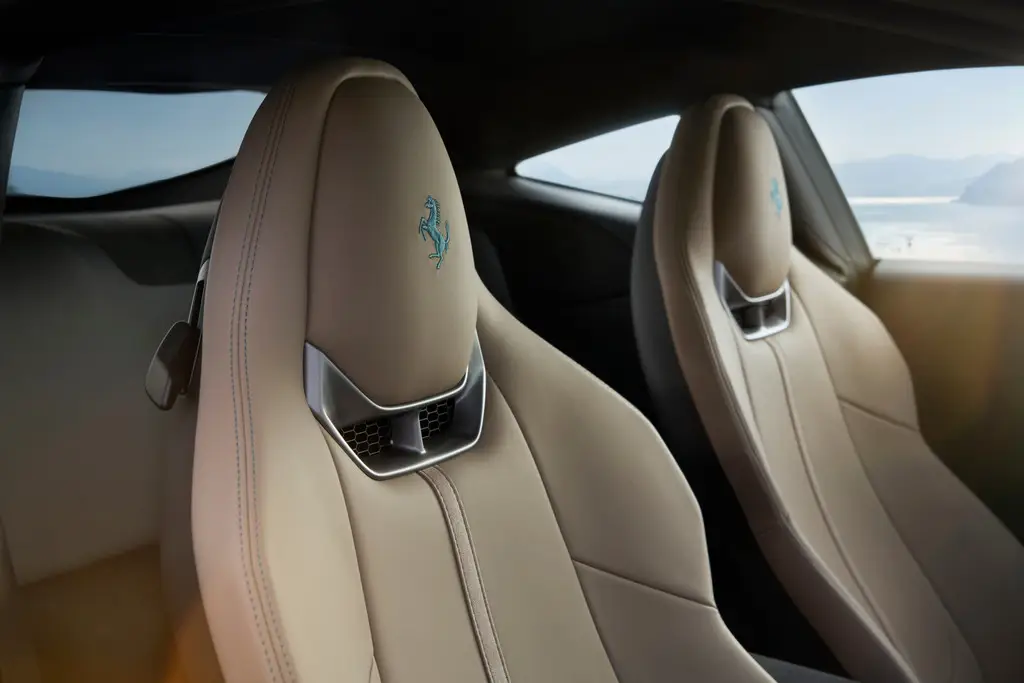
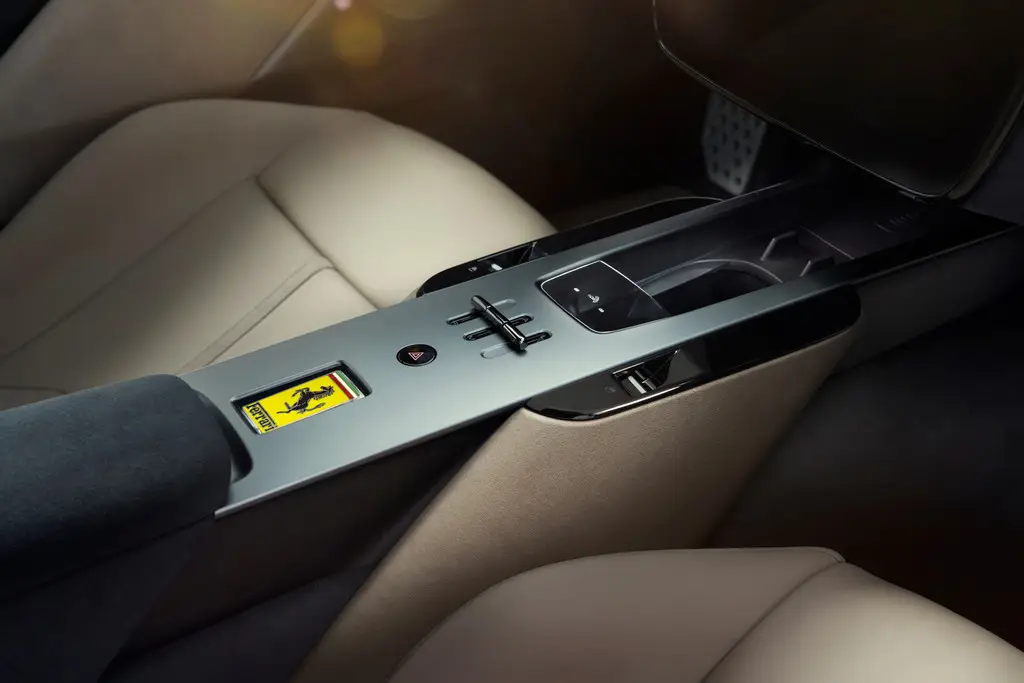
Material choices reinforce the grand-tourer brief. Hand-stitched leather covers the sport seats, machined aluminium runs along the central tunnel in a subtle nod to Ferrari's classic gated shifter, and the switchgear finally moves back toward tactile, physical controls after years of capacitive experimentation. The Cavallino embroidered into the headrests is, as always, the only badge the interior really needs.
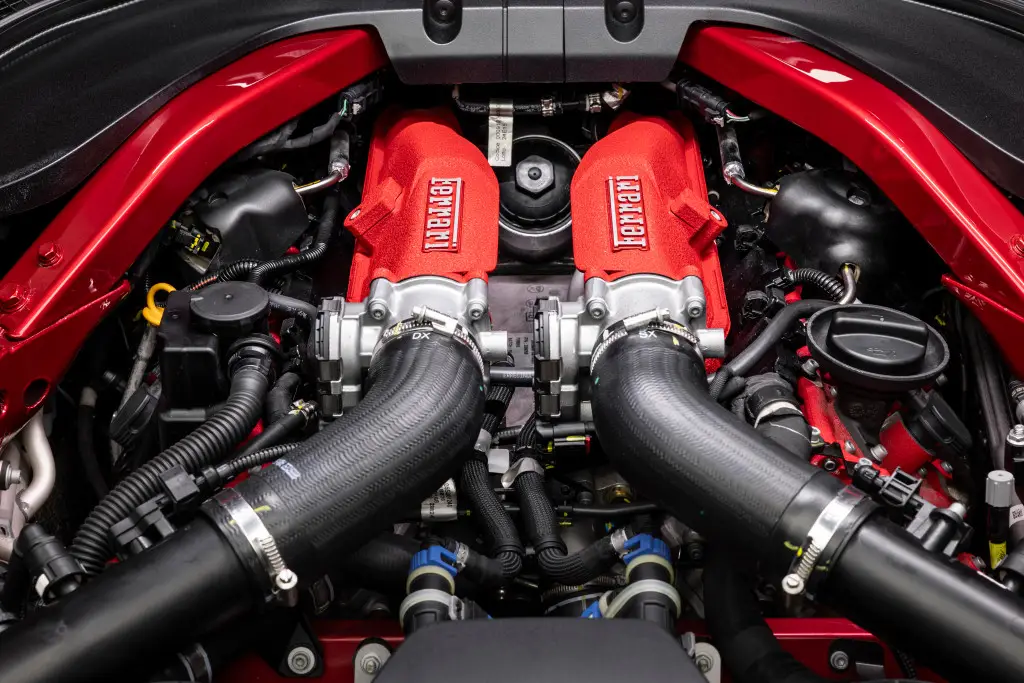
At its heart, the Amalfi remains true to Ferrari's engineering philosophy. Power is delivered by a twin-turbocharged 3.9-litre V8 producing 640 cv at 7,500 rpm and 77.5 kgfm of torque between 3,000 and 5,750 rpm — enough to launch the car from 0 to 100 km/h in 3.3 seconds and on to 200 km/h in just 9 seconds. An eight-speed dual-clutch gearbox sends drive to the rear wheels alone, preserving the purity of layout that has defined Ferrari's front-mid-engined GTs for generations.
The chassis has been retuned to match. Double-wishbone suspension at both ends, revised electric steering and ventilated brakes at all four corners give the Amalfi the composure of a much smaller car, while a kerb weight of around 1,470 kg keeps it agile on tight coastal roads. Wide 285-section rear tyres translate the V8's output cleanly to the tarmac without ever feeling overwhelming.
Yet the Amalfi is not a track-focused machine. It is designed for long coastal drives, mountain roads and effortless high-speed touring — a car in which crossing three countries in a weekend feels less like a challenge and more like the whole point. The 273-litre boot and 80-litre fuel tank are small details, but they say a lot about the intent: this is a Ferrari built to be used.
Cars like the Amalfi are less about lap times and more about the experience. They invite their owners to cross countries, explore coastlines and enjoy driving itself — qualities increasingly rare in an automotive landscape dominated by SUVs and electrification. It is telling that Ferrari, a company perfectly capable of building the fastest cars on any given day, continues to invest in the grand tourer as a category.
It is this philosophy that continues to make Ferrari's grand tourers some of the most desirable automobiles in the world. They are objects, certainly, but they are also invitations — to plan a route, to leave earlier than necessary, to take the road that isn't on the way.
The Ferrari Amalfi isn't simply another high-performance sports car. It represents a modern interpretation of luxury mobility — where design, craftsmanship and engineering come together to create something that feels timeless rather than fashionable. It is a Ferrari confident enough to be quiet when it wants to be, and loud only when it matters.
For those who believe that the journey should be every bit as memorable as the destination, the Amalfi is exactly the kind of Ferrari worth paying attention to.
The Amalfi is designed for long coastal drives, mountain roads and effortless high-speed touring — a Ferrari built for the journey itself.
Technical specification
- Engine
- Petrol, front-mid, longitudinal V8, 32V, 3,855 cm³
- Power
- 640 cv @ 7,500 rpm
- Torque
- 77.5 kgfm @ 3,000–5,750 rpm
- Transmission
- 8-speed DCT automatic, rear-wheel drive
- Steering
- Electric
- Suspension
- Double wishbone (front and rear)
- Brakes
- Ventilated discs (front and rear)
- Tyres
- Front 245/35 R20 · Rear 285/35 R20
- Dimensions
- L 466 cm · W 197.4 cm · H 130.1 cm · Wheelbase 267 cm
- Boot / Fuel tank
- 273 L · 80 L
- Weight
- 1,470 kg
- 0–100 km/h
- 3.3 s
- 0–200 km/h
- 9.0 s

Author
James Okafor
Motoring & Watches Correspondent
James has spent fifteen years writing about cars, coachwork and independent watchmaking.
More from Motoring

The Grand Tourer Is Having a Renaissance
A category once considered old-fashioned is being reinvented for a generation raised on distance driving.

A New Era for Electric Performance
The first generation of electric supercars was fast. The second generation is trying to be interesting.
The Escaping Edit
Escape the ordinary.
Join The Escaping Edit, a curated weekly selection of exceptional places, ideas, objects and people.